

Bitkom DESI 2026
Bitkom DESI 2026
Here you can download the full presentation in english.
Overall EU Member State Ranking
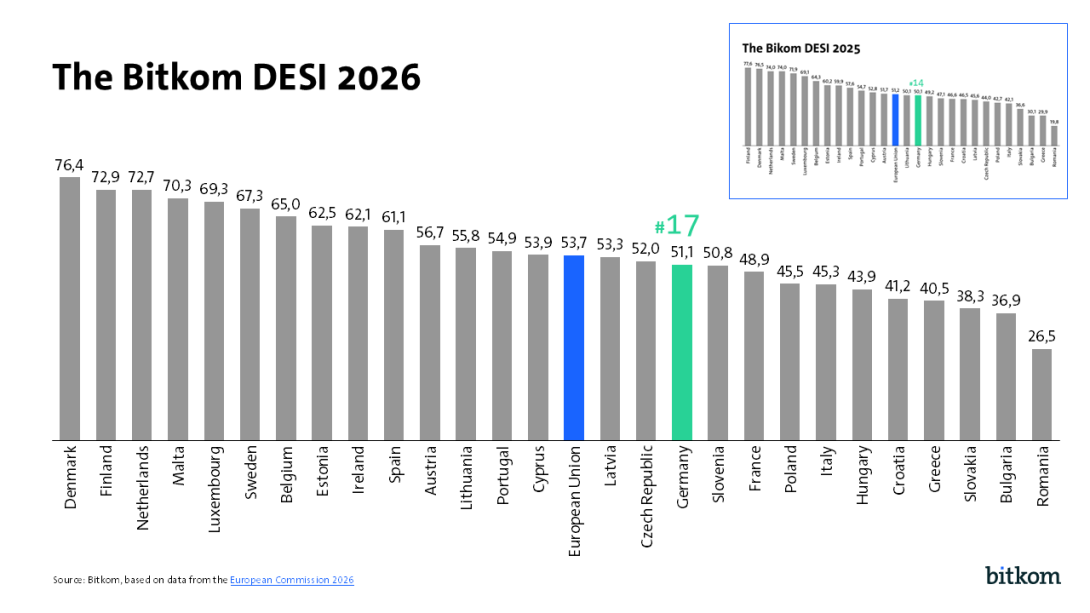
Digital performance across the European Union
This year’s overall EU Member State ranking is led by Denmark, followed by Finland and the Netherlands, while scores vary considerably across the remaining Member States. Germany ranks 17th and remains in the middle of the EU ranking.
The Bitkom DESI Dimensions in Detail
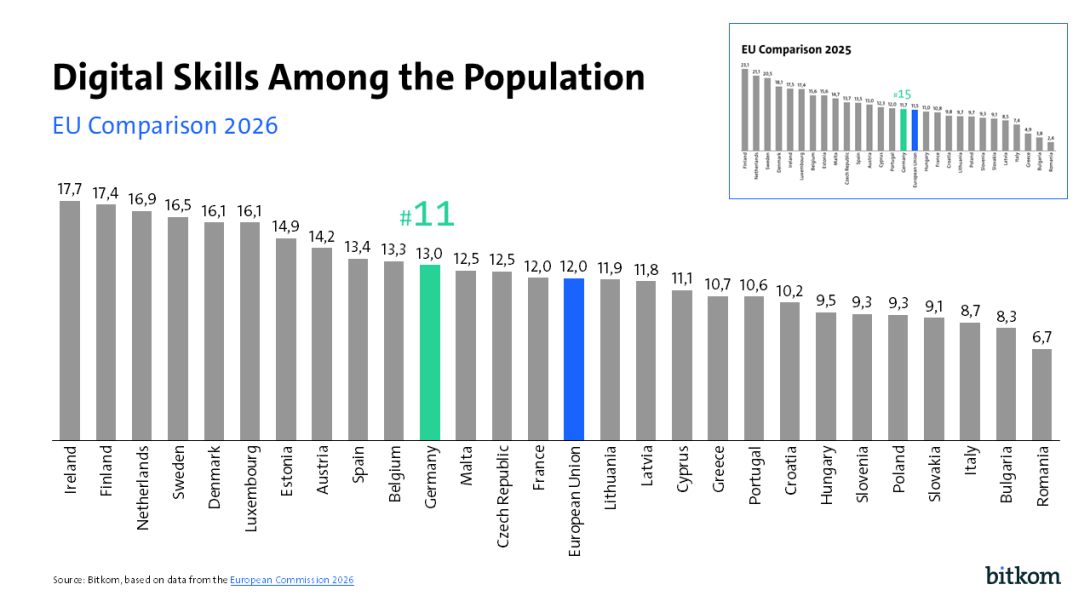
Digital Skills
The Digital Skills dimension assesses digital proficiency and participation among the population. It includes indicators on internet use, basic and advanced digital skills, ICT specialists and graduates, the use of generative AI, and people’s ability to assess online information and navigate potentially harmful content.
Digital Transformation of Businesses
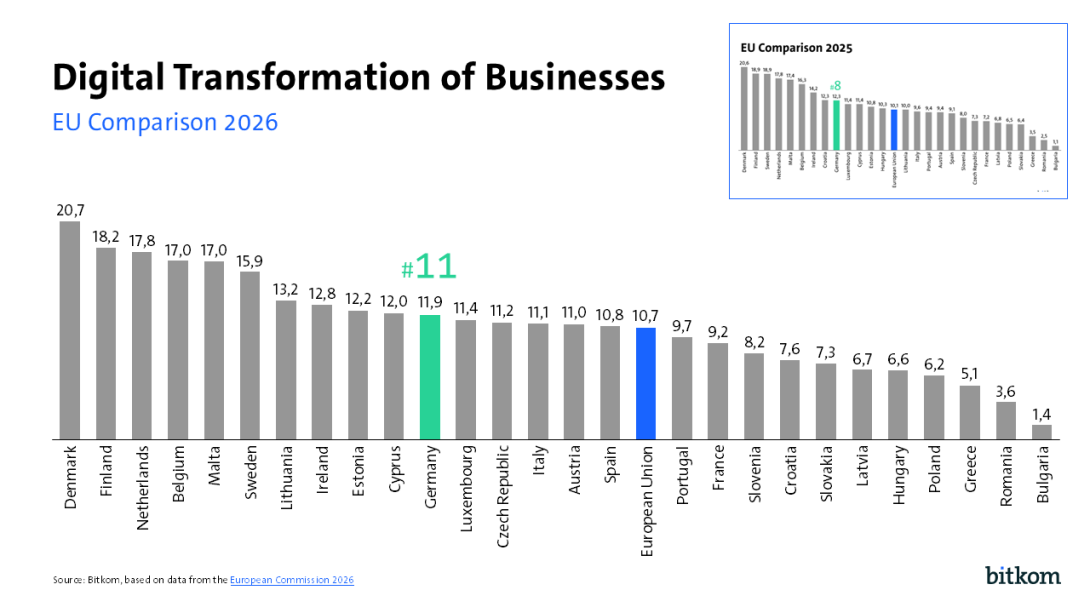
The Digital Transformation of Businesses dimension includes indicators such as digital intensity, data analytics, cloud computing, artificial intelligence, social media use, electronic information sharing, e-commerce, ICT security, unicorns, and trade in ICT goods and services.
Network Quality
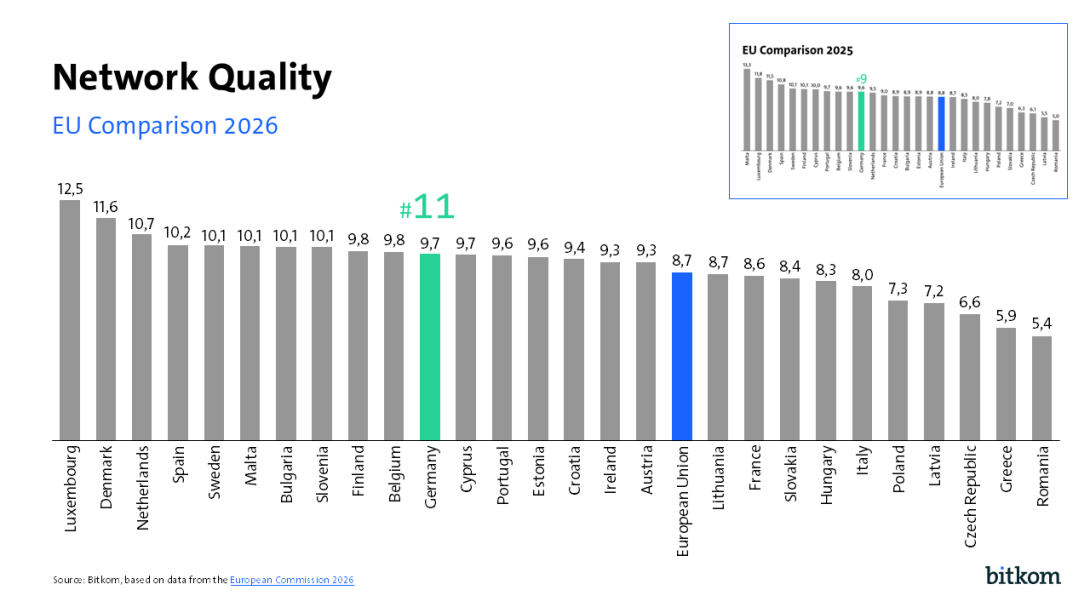
The Network Quality dimension assesses the availability and performance of digital infrastructure. It includes indicators on very high-capacity network coverage, overall 5G coverage, allocated 5G spectrum and the deployment of edge nodes.
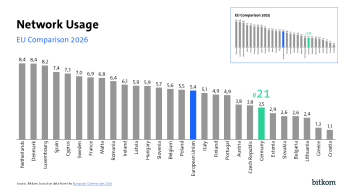
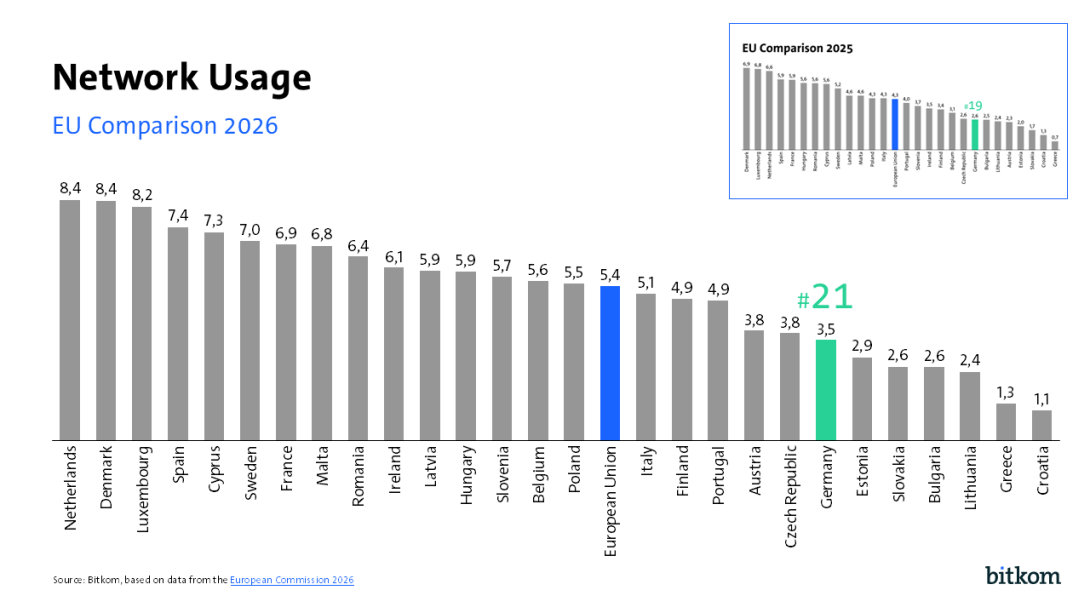
Network Usage
The Network Usage dimension assesses the extent to which households and businesses use fixed and mobile connectivity. It includes indicators on overall internet and mobile broadband take-up, high-speed fixed broadband subscriptions and the prevalence of 5G SIM cards.
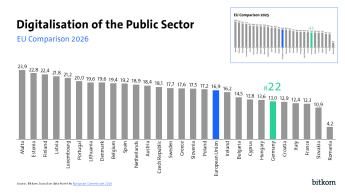
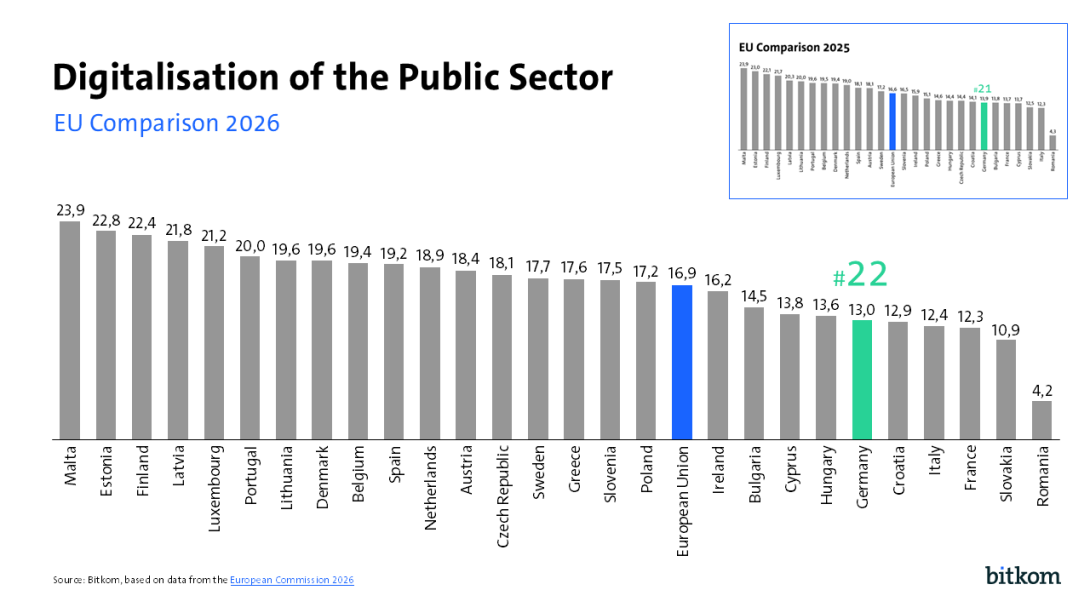
Digitalisation of Public Services
The Digitalisation of Public Services dimension assesses the availability, quality and accessibility of digital public services for citizens and businesses. It includes indicators on e-government use, digital services for citizens and businesses, pre-filled forms, transparency, user support, mobile friendliness and access to electronic health records.